CandLE Student Features On BBC Breakfast
It is a proud week at CandLE as one of our students has been recognised by BBC News for his hard work in completing his GCSEs. Patrick is 16, with cerebral palsy, and completed his examinations using eye gaze technology.
Since September 2025, we have had the privilege of working alongside Patrick, his family and his school, with one very important goal: to give Patrick the best possible opportunity to demonstrate what he knows and can do in his GCSE examinations.
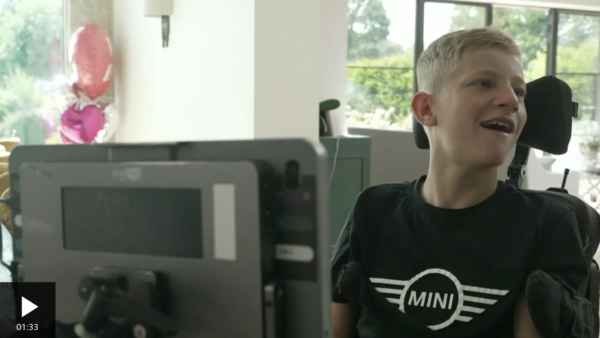
Patrick is a capable young man. However, through no fault of his own, his disability and medical needs mean that the traditional model of sitting timed examination papers simply does not provide him with a fair or meaningful way to demonstrate his ability.
Through an Alternative Assessment approach, Patrick has been able to access his GCSE examinations in a way that recognises his individual needs. Asking him to complete examinations in the same way as his non-disabled peers would not have created equality, it would have placed him at a significant disadvantage before he had even begun.
Our work at CandLE has been about levelling the playing field as far as practically possible. Working with Patrick, his school and others involved to find a way forward within an examination system that was simply not designed with students who have needs like Patrick’s in mind.
This has taken a huge amount of work, collaboration, problem-solving and advocacy. At the centre of all of it has been a young person who deserves the same opportunity as any other student: the chance to show what he knows and gain a qualification, rather than being limited by the way he is physically required to show it.
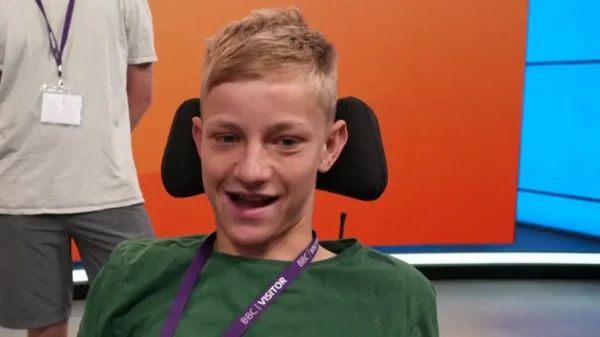
Speaking to BBC Breakfast about the scale of the challenge, Patrick explained: “I did all seven of my GCSEs over a five-month period with my eyes.”
“I wasn’t able to write my workings out so I had to do them in my head, which was very difficult.”
Our Assistant Head of Education and Exams Officer, Laura Baggley, said: “We are incredibly proud to have supported Patrick on this journey and to see barriers challenged rather than simply accepted. Because reasonable adjustments are not about making things easier. They are about making access fair.”
Patrick now hopes to study media at A-level and ultimately pursue a career in television, telling BBC Breakfast: “My ultimate dream is to work in media and to be the next Claire Balding on wheels.”
We have advocated hard for Patrick because access should never be confused with ability. And Patrick’s story is not an isolated one. We support students across the country who are bright, capable and motivated to learn, but who face significant barriers in accessing education because of their physical, communication, or access needs. For some, this includes eye gaze technology, for others, it may involve alternative access methods, adapted resources or highly individualised arrangements. Too often, the difficulty is not a student’s ability to learn or understand. The difficulty is that education and assessment systems are not always designed with students like Patrick in mind.
The question should never simply be, “Can this student do it in the usual way?” It should be, “What needs to change so this student has a fair opportunity to show us what they can do?”
We work alongside students, families, schools, colleges, local authorities, awarding organisations and other professionals to identify barriers and find practical ways to overcome them. This can involve assessment, educational support, specialist teaching, exam access arrangements, resource development and, importantly, advocacy.
Visit our services pages to find out more about the support we provide.